What you need to know
Vibra 2.0 introduces a new UX Benchmarking Engine, launching this May, that analyzes your homepage and compares it against thousands of SaaS and ecommerce patterns. You will be able to get structured feedback on key conversion signals, heuristic insights, and actionable improvements.
Vibra is no longer just a set of free tools. It includes a dashboard, saved reports, PDF export, and deeper UX analysis features now.
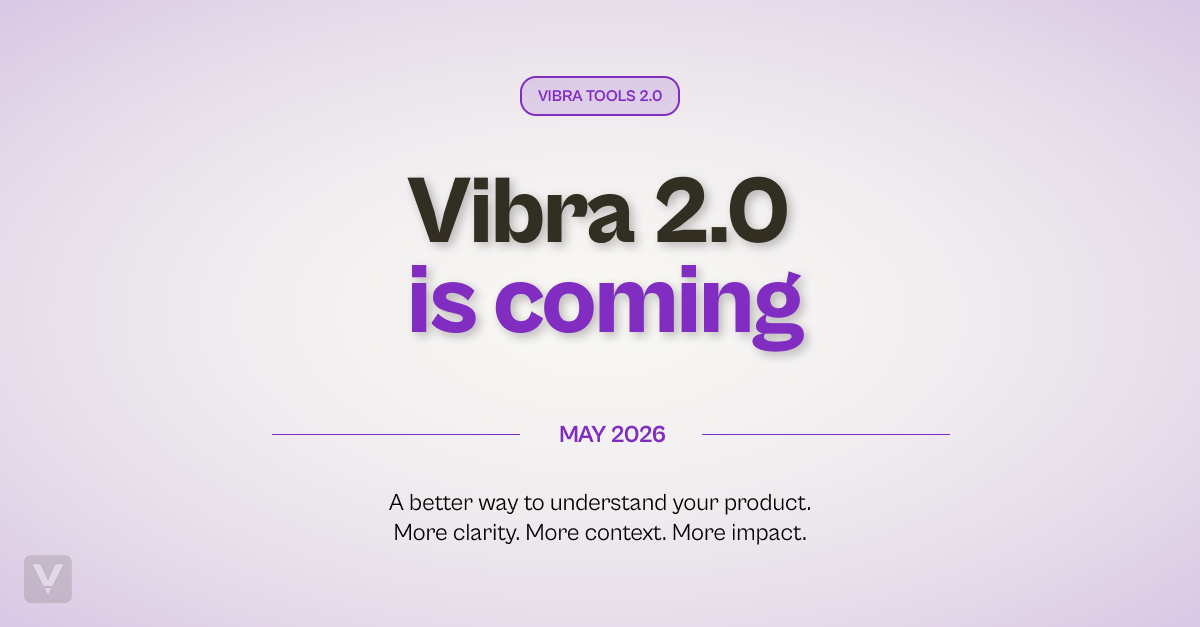
Vibra 2.0 is launching this May
I have been waiting for a new level of Vibra for almost a year now. Vibra 2.0 is almost out, and here is what we have prepared for all users.
Last year, Vibra was launched as a product for creatives. Since then, I have been observing user behavior, analyzing what gets the most attention, and reading feedback across different platforms to understand how the product evolves in users’ eyes.
Some features were removed, some were redesigned, and many were refined. But most importantly, Vibra now introduces a new core feature — the UX Benchmarking Engine.
This feature might be relevant in today’s AI era, where building websites and apps is easier than ever, but understanding conversion quality is not.
I analyzed more than 10,000 SaaS and ecommerce websites to identify recurring patterns. These patterns were then combined with well-established UX heuristics and principles found in foundational books such as The Design of Everyday Things (Don Norman), Don’t Make Me Think (Steve Krug), and About Face (Alan Cooper).
Kahneman’s Thinking, Fast and Slow also played a key role, especially concepts like cognitive ease and loss aversion.
The intention was to help users understand how their homepage performs compared to real-world patterns, and translate UX signals into something actionable.
What’s new?
Vibra 2.0 is now available behind login. All existing free tools remain free, nothing is being taken away.
We are introducing a dashboard and user accounts, which will unlock a more structured experience going forward.
UX Benchmarking Engine
The biggest update in Vibra 2.0 is the UX Benchmarking Engine — the first step in Vibra’s evolution.
Users can enter a domain and choose whether it is SaaS or ecommerce. The system then analyzes publicly available homepage elements such as headlines, CTAs, form presence, pricing visibility, and structural patterns.

These signals are compared against a large dataset of reference websites.
Each signal is evaluated and explained using UX heuristics, helping users understand not just what is happening, but why it matters.
Results are labeled with clear indicators such as “Strong signal” and “Watch this”. The goal here was not only to flag issues, but to educate users on UX principles and conversion behavior.

All sections are structured in the same way, helping users understand their page structure, industry patterns, key reading, what their results may influence, where tension may appear, and how they could improve their results with an extra layer of audit and research.
The system is designed to allow unlimited homepage analyses. Reports will be available for €9/report.
Purchased reports can also be exported as PDF for sharing with teams or designers.
UX Sprint
Alongside this update, we are introducing UX Sprint — a deeper, project-based offering for users who want more than automated insights.
UX Sprint includes expanded analysis and human-led UX audits with a more personalized approach.
More details about this will be shared soon.